


Olive: Live Video Chat App
4.41.90K Reviews
App Specs
- Version
- 3.1.1
- Updated On
- License
- Free
- Downloads
- 10,000,000+
- Developer
- Accordmobi
- Categories
- Social
- Platform
- Android, iOS
Screenshots


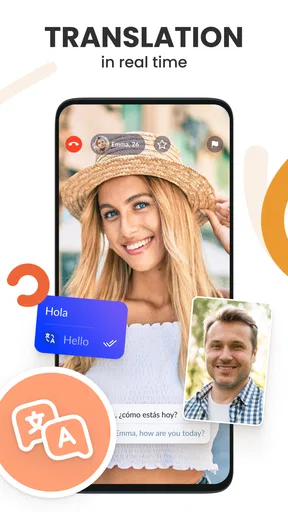
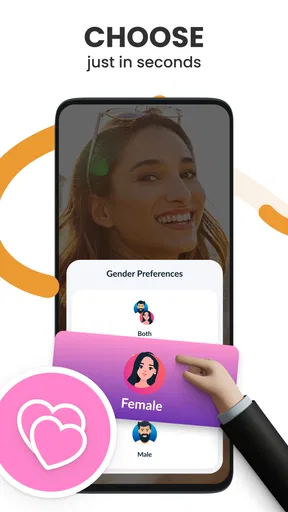
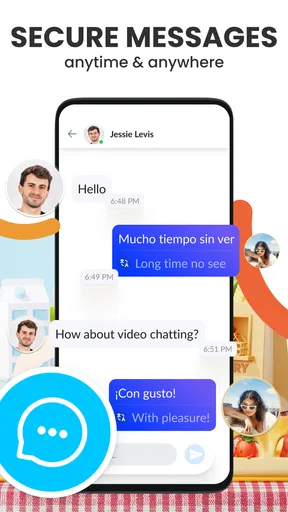

 Analysis by AppCompare
I tried Olive as a way to meet people through live video rather than relying on text profiles and carefully edited photos. That difference is the whole point: the app puts a face-to-face conversation at the center, which can feel more immediate and personal than ordinary social feeds. It is a free social app from Accordmobi, aimed at adults, and its mature rating is important because the experience is built around meeting people you may not know.
My overall impression is mixed in a useful way. Olive is strongest when you want spontaneous human contact and are comfortable with the unpredictability of live conversations. It is less suitable if you want a highly controlled community, detailed matching filters, or a quiet messaging tool. I would recommend approaching it as a casual video-chat space, not as a guaranteed route to meaningful friendships or dating.
How Olive feels to use today
I’d think about Olive differently on a shared household phone or tablet than on my own device: live conversations are personal, and a device left on a kitchen counter can blur who is using the app and who is visible in the background. Before opening it, I’d make sure the person signed in is the person choosing to chat, then consider the account boundaries that matter in that home. That practical starting point leads into the setup decisions I’d make before a first session.
A direct approach to meeting people
The app’s basic appeal is easy to understand. Instead of spending a long time browsing profiles, I can enter a setting designed for live video interaction and decide quickly whether a conversation feels comfortable. That immediacy makes the experience more engaging than scrolling, but it also removes some of the preparation and control found in conventional social apps.
That trade-off affects the whole experience. A live video call gives me more information than a username or a short biography, yet it also asks me to react in real time. If I am tired, distracted, or not ready to appear on camera, Olive is not especially convenient. The app works best when I have a few uninterrupted minutes and genuinely feel like talking.
Because it connects people around the world, conversations can feel varied and unexpected. I can encounter different accents, communication styles, and expectations about what a social video chat should be. That international element is one of the more interesting reasons to try it, although it also means that not every interaction will feel natural or relevant to me.
Who will get the most from it
I see Olive as a good fit for adults who enjoy meeting strangers, practicing casual conversation, or breaking up a lonely evening with a quick video exchange. It may also appeal to someone who finds traditional social networks too passive. The app gives the interaction a stronger sense of presence, which can be refreshing when text conversations have started to feel repetitive.
Worth Reading Before You Choose

Flipboard Shows What News Apps Must Do Beyond the Feed

Switching to Android Auto Means Rethinking Your Driving Routine

Google Calendar Makes a Crowded Week Easier to Manage

Ludo King Makes the Most of the Minutes Between Plans

Baby Panda World Brings Quick Play to Modern Phones, but Its Game Library Feels Busy

ESPN’s Live Game View Makes Following Close Games Easier
It is not my first choice for someone looking for a carefully moderated professional network, a focused language-learning service, or a private group-chat platform. Those needs usually call for tools with clearer communities and more predictable behavior. Olive is broad and spontaneous, so its value depends heavily on the people available at the moment I open it.
The mature rating should not be treated as a minor label. I would only suggest using the app if you are comfortable with adult-oriented social interaction and understand that live communication can be unpredictable. Anyone who is especially concerned about unwanted contact should think carefully before joining a service centered on conversations with unfamiliar people.
What the current version tells me
The current version is 3.1.1, and the app has been available since May 9, 2019. That history suggests Olive is not a brand-new experiment; it has had time to establish its identity as a live video-chat product. At the same time, a version number alone does not tell me that every rough edge has disappeared, so I would keep expectations realistic.
Its public reach is substantial, with more than ten million installs and an average rating of 4.4 from roughly one hundred thirty-eight thousand ratings. Those figures make it easier to take the app seriously as an active social service, but they do not guarantee that every session will be enjoyable. Live communities can feel very different depending on the time, the people online, and how well the interaction matches my mood.
Accordmobi presents it as a free app, which lowers the barrier to trying it. There are in-app purchases ranging from $0.49 to $199.99 per item, so I would avoid treating “free” as meaning that every part of the experience is necessarily cost-free. Before spending anything, I would first use the basic experience long enough to decide whether the conversations themselves are worth returning to.
How the product has evolved
The most useful way to view Olive’s development is as a move toward a more established live-social identity rather than a simple messaging utility. Its release history and current version show an app that has continued beyond its initial launch. For an existing user, that is reassuring because the product has not been abandoned after a brief burst of attention.
Still, I would separate that evidence from assumptions about future improvements. A current version does not automatically promise better matching, stronger moderation, or a redesigned interface in the next update. Those are areas I would watch, but I would not choose Olive based on features that have not appeared in the app I can use now.
For new users, the practical result is that Olive feels like a service with an established audience rather than an empty room. For returning users, the more important question is whether the people they meet and the flow of conversations remain satisfying. In a live social app, community quality often matters more than a small interface change.
Making a first session less awkward
I would not open Olive while multitasking or rushing between appointments. A better routine is to choose a comfortable place, check the lighting, and decide in advance how long I want to stay. That sounds simple, but video chat exposes distractions and poor lighting much more than text-based social apps do.
I also recommend starting with a modest goal. Instead of expecting an instant close friendship, I would treat the first few conversations as a way to learn how the service feels. A short, polite exchange is already enough to judge whether the pace and social atmosphere suit me. This prevents one disappointing interaction from becoming a verdict on the entire app.
Another useful habit is to keep personal details general at first. Live video can create a false sense of familiarity because seeing someone’s face feels more intimate than reading a message. I would avoid sharing a home address, workplace details, financial information, or other identifying facts until trust has been earned outside the app as well.
A realistic everyday scenario
Imagine finishing work with half an hour before dinner and wanting conversation rather than another silent scroll through a feed. I could open Olive, spend a few minutes meeting people, and leave after one or two exchanges. In that situation, the app’s spontaneity is a benefit: I do not need to arrange a group chat or wait for someone to answer a message.
The same scenario also shows its weakness. If the available conversations are uncomfortable, repetitive, or poorly timed, I may spend that half hour skipping interactions instead of enjoying them. Olive can create a pleasant surprise, but it cannot guarantee that the right person will be available when I am. That uncertainty is part of the product, not a temporary inconvenience I should ignore.
Where it differs from familiar alternatives
Compared with a standard social network, Olive is less about building a public timeline and more about immediate contact. I do not approach it expecting the same kind of long-term feed, status updates, or carefully organized circles that larger social platforms provide. Its advantage is presence; its cost is reduced control over the first impression and the direction of the conversation.
Compared with text-first chat apps, video makes it easier to judge tone and responsiveness. A conversation can feel warmer when I can see expressions and hear a voice. However, video also creates more pressure. Someone who prefers composing thoughtful messages or staying off camera may find a conventional messenger much more comfortable.
Compared with dedicated dating services, Olive appears broader and less structured from my perspective. I would not assume that everyone I meet has the same romantic intentions, and I would clarify expectations rather than reading too much into a friendly conversation. If I wanted detailed preferences, deliberate matching, and a clearer relationship-oriented purpose, I would choose a service built specifically around those tools.
The friction that matters most
The biggest limitation is the unpredictability of live social contact. The app can connect me quickly, but speed does not equal compatibility. Some conversations may end almost immediately, while others may feel one-sided or difficult to steer. That is normal for spontaneous video chat, yet it can become tiring if I am looking for consistent, high-quality interactions.
Privacy is another serious consideration. Even when I behave carefully, I cannot control how another person acts during a live conversation. I would avoid showing documents, screens, mail, or recognizable private surroundings in the background. A neutral setting is not just more comfortable; it reduces the amount of information I reveal accidentally.
The purchase range also deserves attention. The app can be tried without an upfront price, but optional spending can change how I think about continued use. I would set a personal limit before exploring paid items and would never spend to prolong an interaction that already feels uncomfortable. Free access is useful for evaluation, while purchases should remain a deliberate choice rather than a reflex.
Advice for returning users
Existing users may benefit from changing when and how they use the app rather than simply opening it more often. If one session feels disappointing, I would try again at a different time and with a narrower purpose, such as casual conversation or meeting someone from another country. This can reveal whether the problem was the service itself or simply the particular group available then.
I would also pay attention to emotional energy. Live video can be more demanding than messaging, especially after a long day. If I notice myself accepting conversations only because I feel obligated to be polite, it is better to leave. A social app should fit my boundaries, not pressure me into staying available.
For people who have used Olive for a while, the main measure of progress is not the number of conversations but their quality. I would remember which kinds of exchanges feel worthwhile, how quickly I can recognize an uncomfortable interaction, and whether the app is adding something positive to my routine. That personal test is more useful than chasing activity for its own sake.
What I would like to see next
Looking ahead, I would watch for improvements that make spontaneous video chat feel safer and more manageable without removing its immediacy. Clearer ways to control who can contact me, stronger tools for ending unwanted interactions, and transparent handling of paid elements would all make a meaningful difference. These are the areas that determine whether a live social app remains enjoyable after the novelty fades.
I would also watch how the community develops. A large audience is helpful only when it produces conversations that feel respectful and varied. If the service continues attracting people with different reasons for joining, it should remain interesting; if interactions become repetitive or harder to control, the install count will matter less to an individual user.
That is why I would judge future updates by their effect on everyday use rather than by the version number alone. A small change that improves comfort, clarity, or control could matter more than a flashy addition. For now, Olive’s central idea remains appealing, but its success depends on whether the live community makes that idea worth returning to.
My final recommendation
I would recommend Olive to an adult who wants spontaneous video conversations and is willing to accept that some sessions will be awkward or unremarkable. It is easy to understand, free to try, and large enough to offer the possibility of meeting people beyond my usual social circle. The live format gives it a more personal feel than a text-only network.
I would skip it if I needed strict privacy, predictable matching, professional networking, or a clearly defined dating environment. In those cases, a more specialized alternative is likely to serve me better. I would also be cautious about spending, since optional purchases can range from very small amounts to $199.99 per item.
After weighing the current experience, Olive feels best as an occasional social outlet rather than an app I would use automatically every day. I like the chance of an unexpected, genuine conversation, but I would use it with firm boundaries and realistic expectations. Its real strength is immediacy; its real weakness is the lack of certainty that comes with it.
Pros
- Quick matching makes it easy to meet new people.
- Live video conversations feel more personal than text chats.
- Simple interface is easy for first-time users.
- Useful filters help narrow down potential matches.
- Works well for casual socializing and spontaneous chats.
Cons
- Some features may require in-app purchases or a subscription.
- Video quality can depend heavily on your internet connection.
- You may encounter inactive
- rude
- or unsuitable users.
- Privacy concerns exist when sharing video with strangers.
- The app can use significant battery and mobile data.
FAQs for Olive: Live Video Chat App
What is Olive: Live Video Chat App used for?
Olive: Live Video Chat App is designed for meeting and communicating with people through live video conversations. After creating a profile, users can browse available contacts, send messages, and start video chats with people they are interested in. The app focuses on social discovery and real-time interaction, so it may appeal to users looking for new online conversations rather than a traditional messaging service.
Is Olive: Live Video Chat App free to download and use?
Olive can generally be downloaded without an upfront charge, but some features may require in-app purchases, virtual credits, subscriptions, or other paid options. The exact pricing and available features can vary by country, device, account, and app version. Before starting a video chat or purchasing credits, review the payment details carefully to understand what is included and whether charges may recur.
Is Olive: Live Video Chat App safe for meeting strangers online?
As with any live video chat platform, users should be careful when interacting with people they do not know. Avoid sharing your home address, phone number, passwords, financial information, or private photographs. Use the app’s blocking and reporting tools if someone behaves suspiciously or offensively. It is also wise to keep conversations inside the app until you feel comfortable and to verify privacy settings before using video features.
Does Olive require access to my camera, microphone, or location?
Video calling normally requires permission to use your device’s camera and microphone, while some social features may request notifications, contacts, or location access. You can review these permissions during installation or later in your Android or iOS settings. Only grant access that seems necessary for the features you plan to use. If you deny camera or microphone access, live video conversations may not work correctly.
What should I do if Olive: Live Video Chat App is not working properly?
If the app crashes, video calls fail, or messages do not load, first check your internet connection and make sure Olive is updated through the official app store. Restarting the app or device can also resolve temporary problems. Confirm that camera and microphone permissions are enabled, and check whether the service is experiencing an outage. If the issue continues, contact the app’s support team with your device model and a description of the problem.


